News

iPad Display Issues with Stylus: Why Copy Pens Cause Touch Problems

iPad Display Issues with Stylus: Why Copy Pens Cause Touch Problems

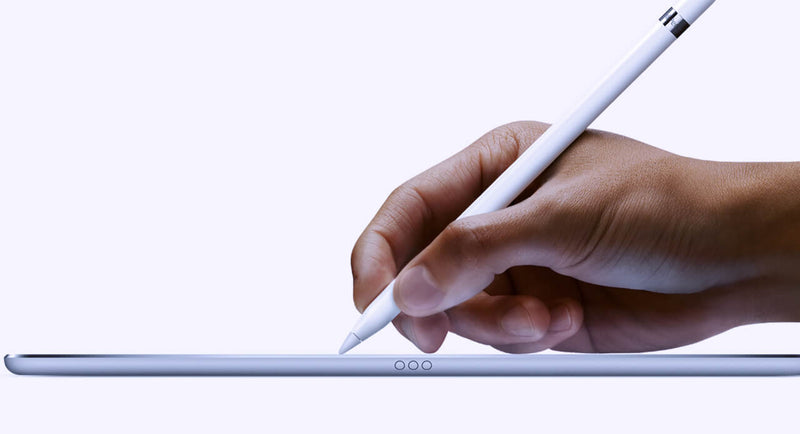
Lately, we’ve been seeing more and more cases where customers report that the iPad display is “not responding properly” when using a pen. At first glance, it looks like a touch issue, but after testing quite a few of these, the pattern is pretty clear. In most cases, the display is actually fine. The difference comes down to the type of pen being used. When we test with an original Apple Pencil, everything behaves as expected. You can write normally, rest your hand on the screen, and the input stays stable. No jumps, no interruptions. But when we switch to a copy pen, things change. If you only use the tip, it often works okay. The moment you rest your hand on the screen while writing, you start seeing issues. Lines break, touch becomes inconsistent, or the screen seems unresponsive. That’s usually the moment customers think the display is defective. From a repair perspective, this is where things go wrong if you’re not careful with testing. If you only test quickly with a pen—especially without resting your hand—you might miss it. If you don’t ask what pen the customer is using, you might approve an RMA that shouldn’t be one. The easiest way to avoid this is to go back to basics when testing: First, use your fingers and check the full screen If touch works fine everywhere, that already tells you a lot Then test with an original Apple Pencil (your reference) Only after that, test with a third-party pen and simulate real usage (including resting your hand) That last part is important because that’s exactly where copy pens tend to fail. It’s not the screen struggling—it’s the pen not handling palm rejection properly. We’ve also found that asking the customer one simple question upfront saves a lot of time: “Are you using an original Apple Pencil?” In many cases, that alone points you in the right direction. If there’s still doubt, ask for a short video from the customer. You can usually see immediately whether it’s a display issue or just how the pen behaves when the hand is on the screen. Key takeaway If the display works fine with touch and behaves correctly with an original pen, then it’s not a screen problem. What looks like a defect is often just the limitation of a copy pen. Catching this early means: Fewer unnecessary returns Less back-and-forth with customers A smoother repair process overall      

Read more
  • Differences between a flexible (Soft) OLED screen and a hard OLED screen

    Differences between a flexible (Soft) OLED screen and a hard OLED screen

    Differences between a flexible (Soft) OLED screen and a hard OLED screen At 4Phones, always seeking to offer the best solutions to our customers, we have developed a guide on how we can tell the difference between flexible and hard OLED displays or screens in order to determine which is the best option and what aspects we must take into account in order to choose ; But before going into the subject it is important to know the difference between an OLED screen and a TFT screen, as it could lead to confusion.The TFT-LCD (Thin Film Transistor-Liquid Crystal Display, is a thin film transistor liquid crystal display) is a variant of liquid crystal display (LCD) that uses thin film transistor (TFT) technology to improve its quality, while OLED OLED screen is actually a screen that produces its own light, which means that the brightness of an OLED screen can be controlled pixel by pixel.4Phones explains that although the TFT screen is usually cheaper, OLED screens for high-end Iphone mobiles are more recommended because they give better results in terms of image, sharpness and brightness.In general, for Apple devices 4Phones recommends the use of quality screens such as OLED screens that are even thinner than TFTs, or reconditioned or refurbished original screens.However, OLED displays have two alternatives: hard displays and flexible displays. Hard OLED Displays Hard OLED screens are cheaper and have a more reliable manufacturing process, however, being made of glass they are more fragile than flexible OLED screen and therefore these screens are easier to break. Fragility also affects when installing these screens as they are more susceptible to shocks and pressure as they crack and deform more easily. In addition, in Iphone in some models like the X it costs that it fits in the lower edge of the screen.Positive aspects of hard OLED displays- Lower price option- Reliable manufacturing process Negative aspects of hard OLED screens - The display module is physically more fragile than the flexible OLED- Deformation, shock or improper installation is likely to cause failure- Does not fit as close to the bottom edge as flexible OLED Flexible OLED displaysFlexible OLED displays are made with a flexible plastic base, therefore they are more resistant and do not deform as easily. However, these attributes do not provide protection for the exterior glass or other components.It is important to bear in mind that these screens, being made of plastic, are a good thermal insulator so over time they can have a tendency to develop burns more quickly than a hard OLED screen. Also, they have a tendency for purple or green lines to appear on the screen.Positive aspects of a flexible OLED display- 1: 1 screen size compared to the original- Physically robust display module Negatives aspects of a flexible OLED display - Shorter useful life due to the characteristics of the materials.- More expensive option- More prone to burning In short, flexible OLED displays are easier to install and harder to break but last less time, while hard OLED displays are harder to install but last longer.4Phones hopes that these tips will help you make the best decision about which is the best OLED screen to buy depending on the type of phone, customer and expectations.4Phones wishes you the best of luck in your repairs. Source: www.recambiostablet.com Image: www.freepik.com
    Read more
  • New iPhone 9

    New iPhone 9

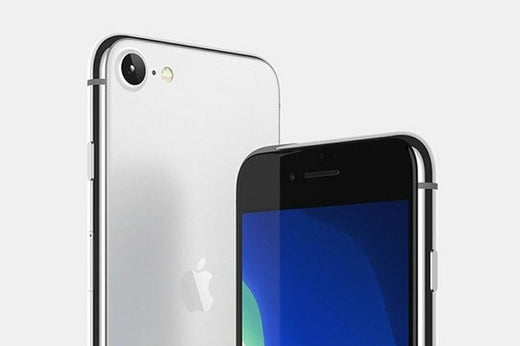
    New iPhone 9 - or New iPhone SE - would be released in April 2020 by Apple The conception of this new iphone model originates from Apple's 2019 sales report, in which the company concluded that users would accept a new, smaller iphone with a home button.In this sense, Apple wanted to develop a new model with these characteristics, the iPhone 9. The forecast before the pandemic was that the iPhone 9 would be launched in March 2020 and it was expected that the sales volume would exceed 30 million units since There are Apple users who would love to get a smaller iPhone with a home button in the iPhone 6,7 and 8 design. This design would be especially attractive to emerging markets and can sell for less than $ 440, a great price if you do. we compare with the launch of iPhone SE with a starting price of 399 USD. The test phase that ended in January 2020.The ihone 9 is a cheaper mobile that is expected to have a Plus or larger variant that will consist of a 5.5-inch screen that runs the A13 Bionic 2019 chipset, and that also matches the current line of iPhone 11.The new iPhone 9 lineup will replace the iPhone 8 and iPhone 8 Plus 2017 as the cheapest entry points to the iOS realm.But the design of this new iPhone should be different enough to persuade iOS users to renew their iPhone 8. The iPhone SE launched with the same camera and processor as the iPhone 6S.The market clearly welcomes lower-priced iPhones, as evidenced by strong demand for the iPhone 11 and iPhone XR before it, but it's unclear whether the consumer will accept the iPhone 8's design that has become a bit dated in the past. the one this new duo is based on.Both the iPhone 9 and iPhone 9 Plus are likely to keep the TouchID security option and the generous chin that comes with it. However, their arrival has been delayed indefinitely as the supply chain suffers from the COVID-19 outbreak. According to a new report, the company held an internal meeting to discuss how to proceed with the launch of this new mobile, and the conclusion of this meeting is that the iPhone 9 will be made official on April 15. It will then be available on April 22. It's unclear whether the company plans to hold an online event for the launch, or will simply issue a press release and wrap up.The iPhone 9 will supposedly start at $ 349 or $ 399, making it an intriguing new entry in the mid-range price war.As for the design of this new model of mobile, expect a blast from the past, with huge screen bezels and a physical capacitive touch ID sensor on the front, below the screen.The final name is also not completely defined as there are strong rumors that the iPhone 9 will be launched on the market as the new Iphone SE.As far as the release deadline goes, given that we are still dealing with a pandemic globally, it goes without saying that Apple's plans could change once again.Let's hope they don't, and maybe Google will also choose to announce the Pixel 4a soon so that it can fight with the iPhone 9 for the hearts and minds of consumers who aren't willing to pay double or triple for a smartphone, especially given the situation right now. Source: https://m.gsmarena.com/

    Read more
  • Covid-19: The safest way to clean our smartphone

    Covid-19: The safest way to clean our smartphone

    How to clean your mobile phone to avoid contagionTO STOP THE EXPANSION OF COVID-19 IT IS IMPORTANT TO MAINTAIN GOOD HYGIENE IN THE OBJECTS THAT SURROUND US4Phones presents a guide published in the newspaper Deia.eus where the main manufacturers and mobile brands give us advice to obtain correct hygiene in our devices and thus avoid contagion, as well as what we must avoid doing to make our mobile phone suffer damage caused by cleaning and / or disinfection practices.Without falling into alarmism or excessive recommendations, with the times, it is advisable to maintain good hygiene measures in the objects that we use in our day to day life. It is enough to follow some small daily hygiene recommendations to preserve the good care of the electronic devices in our home. Smartphones The smartphone is one of the objects that gets the most dirt and, in an emergency like this, it is essential to keep it clean, safe from viruses and bacteria. In addition, the mobile is in direct contact with the hands and face, two of the main routes of contagion of the coronavirus. For this reason, brands such as Apple and Samsung have published manuals on how to clean the screens without damaging them.The first recommendation to keep in mind is that it is not necessary to use harsh cleaning chemicals such as sprays, bleaches or abrasive liquids.It is also not recommended to spray the cleaning liquid directly on the product. It is also important to prevent moisture from entering areas such as the charging point or headphone jack.Samsung explains that the surface should be cleaned gently with a clean, soft cloth. Only if necessary you can moisten the corner of a cloth with a small amount of water and wipe it over the screen very gently. With the dry corner of the cloth we remove the traces of moisture. Apple Apple goes a step further and has launched a series of recommendations to all its users in which it is specified how to clean iPhones and iPads correctly.Following these tips, it is a good idea to gently wipe 70% isopropyl alcohol wipes or disinfectant wipes over the screen, keyboard, and other external surfaces.There is also the option of using a soft, lint-free cloth for cleaning. A good idea is to use microfiber cloths. Ideally, make up and down movements, use a dry cloth to remove moisture, and have a screen protector to make cleaning easier.Do not forget how important it is to disinfect your smartphone when you get home as it is not to touch your eyes or other parts of your face when using it, you should also wash your hands with some frequency. Despite the fact that these indications are directed to all the products of the American giant, they are advice applicable to the rest of the electronic devices in the home. Source: https://www.deia.eus/consejos-coronavirus/2020/03/20/como-limpiar-tu-telefono-movil/1025896.html Image: freepik.com

    Read more
  • New Xiaomi Mi note 10 | Mi Note 10 Pro

    New Xiaomi Mi note 10 | Mi Note 10 Pro

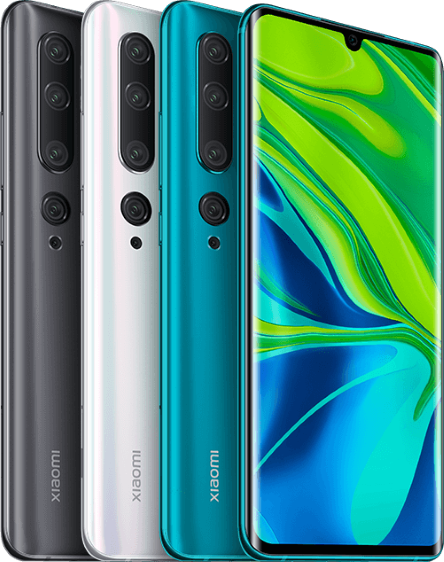
    Xiaomi MI Note 10 / Mi Note 10 Plus The new Xiaomi Mi Note 10 and Mi Note 10 Pro define themselves as pioneers in the generation of 5 cameras on the rear that is composed of: One 5 MP telephoto lens: 5x optical zoom, 10x hybrid zoom, 50x digital zoom, ƒ / 2.0, 4-axis OIS 12 MP Portrait Camera: 2x Optical Zoom, 1.4μm, ƒ / 2.0, Dual Pixel Autofocus 108 MP high resolution camera: 1 / 1.33 ″, 7-element lens, ƒ / 1.69, 4-axis OIS 20 MP Ultra Wide: FOV 117 °, ƒ / 2.2 2 MP macro camera: Shoot with its macro zoom This powerful mobile with a starting price of € 469 has a first 108 MP camera that produces images with great detail. The Mi Note 10 has a 108 MP camera with a photographic resolution of up to 2032x9024, which is 12 times higher than 4K resolution. With its super large 1 / 1.33 "sensor, the Mi Note 10's camera outperforms most digital cameras. By capturing more light and detail, it faithfully reproduces the beauty of landscapes.But the front or selfie camera is not far behind in power. It has 32 MP ultra high resolution capable of capturing small details.The terminal screen has a 6.47-inch curved super AMOLED panel with FullHD + resolution (2,340 x 1,080 pixels) in 19.5: 9 format.It has a fingerprint sensor, fast charging port and charger (included) and a 5260mAH battery.The Qualcomm® Snapdragon ™ 730G processor is the most powerful chip in Qualcomm's 7 series, the Snapdragon ™ 730G offers a maximum frequency of up to 2.2GHz, maximum rendering frequency of 700MHz and increased speed in all operations, games, AI , etc. Storage and RAM Mi Note 10: 6 GB + 128 GB Mi Note 10 Pro: 8GB + 256GB RAM: 6 GB/8 GB LPDDR4x Flash storage: 128 GB/256 GB The available colors of this latest generation mobile are: Midnight Black, Glacier White and Aurora Green Source: https://www.mi.com/es/mi-note-10/

    Read more
  • Displays: OLED, AMOLED, Super AMOLED & Dynamic AMOLED

    Displays: OLED, AMOLED, Super AMOLED & Dynamic AMOLED

    If we talk about OLED screens in mobile telephony, it is easy for Samsung to come to mind. The South Korean company was a pioneer in implementing this technology in smartphones, and many of the current devices carry an AMOLED from this brand, despite the fact that the terminals are from another company. Today we have news that Samsung has patented 'SAMOLED', a nomenclature that, although it does not reveal much about what it means, leaves on the table a new proposal for Samsung panels in 2020. Taking advantage of the addition of another term, no It is a bad thing to review the Samsung technologies that we do know, since it is easy to get confused between so many names. Samsung patents SAMOLED, a nomenclature that joins the existing ones While all Samsung screens are OLED, the company names them in one way or another based on their characteristics. As we read on Letsgodigital, Samsung has patented the SAMOLED brand, describing it as 'OLED screen, smartphone screen, television screen monitor, digital signage, computer screen'. Thus, Samsung ensures that it can use this brand throughout its range of products.Questions remain as to whether 'SAMOLED' is the abbreviation for Super AMOLED or if it is a completely new technology. As we said, there are no details about what exactly SAMOLED is, so there are doubts about whether it will be a completely new panel, or simply it is the abbreviation of 'Super AMOLED', one of the best known technologies in terms of OLED panels. . What we do know is what the rest of the names that the company uses on its phones mean. OLED Before establishing the differences between AMOLED, SuperAMOLED and others, it is good to know the "mother technology", the OLED. OLED (organic light emitting diode) technology is what its name suggests, panels whose pixels are illuminated with a light emitting diode for each pixel.OLED panels have diodes that illuminate the different pixels. Thus, contrast and energy efficiency are increased. Not depending on a matrix of light that illuminates the entire panel (as in the LCD), allows pure blacks, since the diodes do not illuminate those pixels that show black, they are off and, therefore, that part of the panel that shows the black one is too. Being composed of organic material they suffer greater degradation, although manufacturers have been improving over the years to minimize it.Currently, most flagships have an OLED panel (in its different variants), with Apple being one of the latest brands to join these technologies with its iPhone X. AMOLED As for AMOLED screens (active matrix organic light emitting diode), they are widely used in mobile phones. The main difference with OLED screens is that AMOLEDs have an active organic middle layer. On paper, this technology consumes less energy and is more flexible.The difference between AMOLED and Super AMOLED is, mainly, that Super AMOLED screens have an integrated layer inside the screen to recognize touch functions, while in AMOLED touch functions would be recognized only through the upper part of said screen. .Here there are doubts about said extra layer with touch functions and whether or not they are included in more phones that do not call their screens as Super AMOLED, with a clear example in Apple. This point is somewhat controversial, since manufacturers like Apple have the best Samsung panels in their high-end devices, so it is more than likely that they have this layer, and that they do not use the Super AMOLED nomenclature for marketing reasons. Dynamic AMOLED Finally, Samsung tells us about Dynamic AMOLED, the screen technology used in devices like the Samsung Galaxy Fold. The company says that these screens have been present since the Samsung Galaxy S10.These panels are HDR10 + certified, focus on reducing eye fatigue by controlling the blue light emitted by the screen, have a 2,000,000: 1 contrast ratio, and better cover the DCI-P3 color spectrum.In short, they are the highest quality AMOLEDs from Samsung, and they have been given another name to differentiate them from the rest. Thus, it remains to be seen if SAMOLED is its abbreviation, or if it is an improved panel in several respects that well deserves a new nomenclature. Source: https://www.xatakamovil.com/movil-y-sociedad/oled-amoled-super-amoled-dynamic-amoled-que-se-diferencian

    Read more